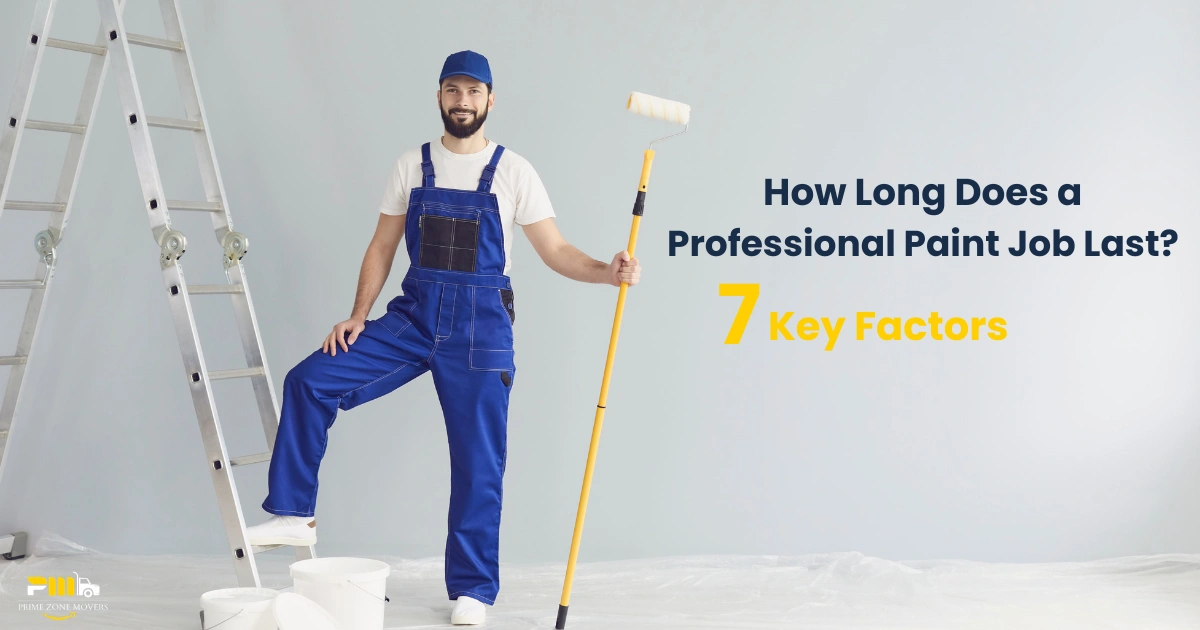
How long does a professional paint job last? In many homes, professionally applied interior paint can remain in good condition for around 5 to 10 years, while exterior paint lifespan varies more depending on climate, sunlight, moisture, surface type, and maintenance.
No single lifespan applies to every painted wall. A low-traffic bedroom can stay fresh much longer than a busy hallway, while an exterior wall exposed to intense sun and changing weather may deteriorate sooner. Surface preparation, paint quality, application, curing conditions, and everyday wear all influence how long a professional paint job lasts.
Understanding these factors makes it easier to distinguish normal aging from early paint failure and decide when repainting is actually necessary.
How Long Should a Professional Paint Job Last?
A professional paint job lifespan depends first on where the paint is applied. Interior surfaces are protected from most weather exposure, so they generally last longer and deteriorate more gradually. Exterior paint has to cope with sunlight, heat, moisture, dust, and changing environmental conditions.
As a general guide:
| Painted Area | Typical Lifespan |
| Low-traffic interior walls | Around 7–10 years |
| High-traffic interior walls | Around 3–5 years |
| Kitchens and bathrooms | Around 3–5 years |
| Exterior surfaces | Often around 5–10 years, depending on exposure |
These ranges should not be treated as guarantees. A well-prepared surface with a suitable coating can remain presentable beyond a typical estimate. At the same time, moisture, poor adhesion, heavy wear, or unsuitable materials can cause paint to fail considerably sooner.
Paint age alone also does not determine whether repainting is necessary. The coating’s condition, adhesion to the surface, moisture issues, fading, cracking, and ability to protect the underlying material are better indicators.
How Long Does Interior Paint Last?
When homeowners ask how long interior paint lasts, the answer often depends on the room.
Bedrooms and Living Rooms
Bedrooms and formal living areas usually experience less physical contact, lower moisture levels, and less frequent cleaning. As a result, interior wall paint in these spaces can often remain presentable toward the longer end of its expected lifespan.
Hallways and High-Traffic Areas
Hallways, entrances, stairways, and family rooms experience considerably more wear. Fingerprints, furniture contact, children, pets, and frequent wiping gradually affect the finish.
These high-traffic areas may need repainting sooner, even when the original application was done correctly.
Kitchens and Bathrooms
Kitchens and bathrooms present different challenges. Steam, humidity, grease, splashes, and repeated cleaning can place extra stress on the coating.
Good ventilation and a paint formulation suited to moisture-prone rooms can help, but these areas often need attention sooner than quieter parts of a home.
How Long Does Exterior Paint Last?
The question of how long exterior paint lasts is harder to answer with a single number because outdoor surfaces experience much greater environmental stress.
Direct sunlight and UV exposure can gradually fade colors and affect coatings. Heat, humidity, moisture, airborne dust, and temperature fluctuations can also influence exterior paint durability.
Exposure levels also matter. A wall that receives strong direct sunlight for much of the day may age differently from a shaded wall on the same property. The underlying surface—such as concrete, render, masonry, or wood—also affects how the coating performs.
This is particularly relevant in hot, sunny environments such as Dubai, where exterior finishes can experience substantial heat and sunlight exposure. Checking local weather and climate conditions helps explain why the same coating may perform differently depending on where and how it is used.
7 Factors That Affect How Long a Professional Paint Job Lasts
Understanding what affects paint lifespan helps explain why two professional paint jobs completed around the same time may not age at the same rate.
1. Surface Preparation
Good surface preparation before painting is a foundation of paint durability.
Dust, grease, loose coating, chalky residue, and damaged material can interfere with paint adhesion. Applying expensive paint over a poorly prepared wall does not correct the underlying problem.
Cleaning, removing unstable material, smoothing rough areas, and ensuring the surface is ready for the selected coating can help the new finish bond more effectively.
2. Repairs Before Painting
Address cracks, dents, holes, damaged plaster, and other imperfections before applying the finish coat.
Simply covering damage with paint may improve appearance temporarily, but the defect can eventually reappear.
Small wall repairs can overlap with routine handyman and home-maintenance tasks that keep surfaces in good condition before decorating or repainting.

3. Primer and Surface Compatibility
Many homeowners ask, does primer make paint last longer?
A suitable primer can improve adhesion, create a more uniform base, seal certain porous surfaces, and help compatible topcoats perform as intended. However, not every wall automatically requires a separate primer.
The right approach depends on the surface condition, previous coating, substrate, and paint system.
4. Paint Quality and Suitability
Paint products vary in durability, washability, moisture resistance, UV resistance, finish, and intended application.
A product designed for an interior bedroom does not face the same requirements as a coating exposed to strong sunlight or moisture outdoors.
Choosing paint that suits both the surface and the surrounding conditions is therefore more important than simply choosing a higher-priced product.
5. Application Technique
Application also affects paint job lifespan.
Uneven coverage, excessively thin coats, overloaded areas, or rushing successive coats can affect the final finish. Following the coating manufacturer’s application requirements and allowing each layer to develop properly can contribute to more consistent performance.
A professional paint job may last longer partly because preparation, coverage, and application are handled more consistently.
6. Drying and Curing Conditions
Paint that feels dry to the touch may not be fully cured yet.
Drying and curing depend on factors such as temperature, ventilation, humidity, Remove featured imagecoating thickness, and paint type. Heavy cleaning, moisture exposure, or physical contact too soon after application can affect a newly painted surface before it has developed its intended durability.
Allowing adequate drying and curing time is therefore an important part of creating a longer-lasting finish.
7. Moisture, Sunlight, and Daily Wear
Even a properly applied coating continues to experience stress after the job is finished.
Indoors, repeated cleaning, furniture contact, humidity, children, and pets contribute to normal wear. Outdoors, sunlight, moisture, heat, dust, and weather exposure gradually affect the coating.
Underlying moisture deserves particular attention. Painting over a wet or moisture-affected surface doesn’t address the source of the problem and can contribute to peeling or other coating failure. Properly controlling moisture before repainting is therefore more important than simply covering damaged areas with another coat.
Does a Professional Paint Job Last Longer Than DIY Painting?
A professionally completed paint job can last longer than a DIY job when it includes thorough preparation, suitable materials, necessary repairs, proper application techniques, and adequate drying time.
However, professional application alone does not guarantee a longer lifespan.
If a wall has unresolved moisture problems, unstable old paint, structural cracks, or an incompatible coating underneath, even carefully applied new paint can fail earlier than expected.
This process-based approach also reflects the professional painting services Prime Zone Movers provides, where experienced painters handle surface preparation, paint application, and finishing based on the property’s condition and requirements.
Signs It May Be Time to Repaint
Instead of repainting just because a certain number of years have passed, inspect the surface’s actual condition.
Common signs you need to repaint include:
- Fading or noticeably dull color
- Peeling or flaking paint
- Cracking
- Bubbling or blistering
- Chalky residue on exterior walls
- Stains that no longer clean away
- Damaged or exposed patches
- Frequent touch-ups becoming increasingly visible
- Evidence of moisture-related deterioration
A fading wall is not necessarily an urgent problem on its own. But fading combined with cracking, chalking, peeling, or loss of adhesion can indicate that the coating is approaching the end of its useful life.
If a property is being prepared for a move or tenancy change, these warning signs can also become part of move-out painting, especially where damaged or inconsistent walls could affect the property’s overall presentation.
How Can You Make a Professional Paint Job Last Longer?
Making paint last longer largely comes down to reducing avoidable damage and addressing problems early.
To help extend paint lifespan:
- Repair leaks and moisture problems as soon as possible.
- Clean painted walls gently rather than scrubbing aggressively.
- Avoid unnecessarily abrasive cleaning products.
- Repair small cracks before they become larger.
- Maintain adequate ventilation in kitchens, bathrooms, and other moisture-prone spaces.
- Inspect exterior walls periodically for fading, chalking, cracks, or peeling.
- Touch up small areas of damage when appropriate.
- Address underlying surface problems instead of repeatedly painting over them.
- Follow maintenance practices suited to the specific coating and surface.
Good paint maintenance cannot make a coating last indefinitely, but it can help prevent minor deterioration from becoming a larger problem.
Getting the Most Life From a Professional Paint Job
So, how long should a professional paint job last? No single answer applies to every surface. Interior paint can often remain attractive for several years, while exterior paint lifespan depends much more heavily on sunlight, moisture, climate, substrate, and exposure.
Surface preparation, paint quality, correct application, curing conditions, everyday wear, and ongoing maintenance all contribute to paint durability. Rather than repainting on a fixed calendar, check how well the existing coating still adheres to, covers, and protects the surface.
Frequently Asked Questions
Can a Professional Paint Job Last 10 Years?
Yes, some low-wear interior surfaces can remain in good condition for around 10 years or potentially longer. The actual lifespan depends on surface preparation, paint type, application quality, room usage, environmental conditions, and maintenance.
Does Primer Make a Paint Job Last Longer?
A suitable primer can support adhesion, create a more consistent base, and improve the performance of some paint systems. Whether primer is necessary depends on the substrate, existing surface, and type of coating being applied.
Why Does Paint Start Peeling Before Its Expected Lifespan?
Early peeling can be associated with moisture, weak surface preparation, unstable old coatings, poor adhesion, incompatible products, or application problems. Identify the underlying cause before repainting.
Is Fading a Sign That a House Needs Repainting?
Fading alone does not always mean you need to repaint immediately. However, significant fading combined with cracking, chalking, peeling, or reduced surface protection may indicate that the existing coating is nearing the end of its useful life.
Disclaimer: Paint lifespan estimates are general guidelines and may vary depending on surface condition, paint quality, climate, application, and maintenance.